Understanding the Body: Lucas McCauley’s Pursuit of Better Human Health
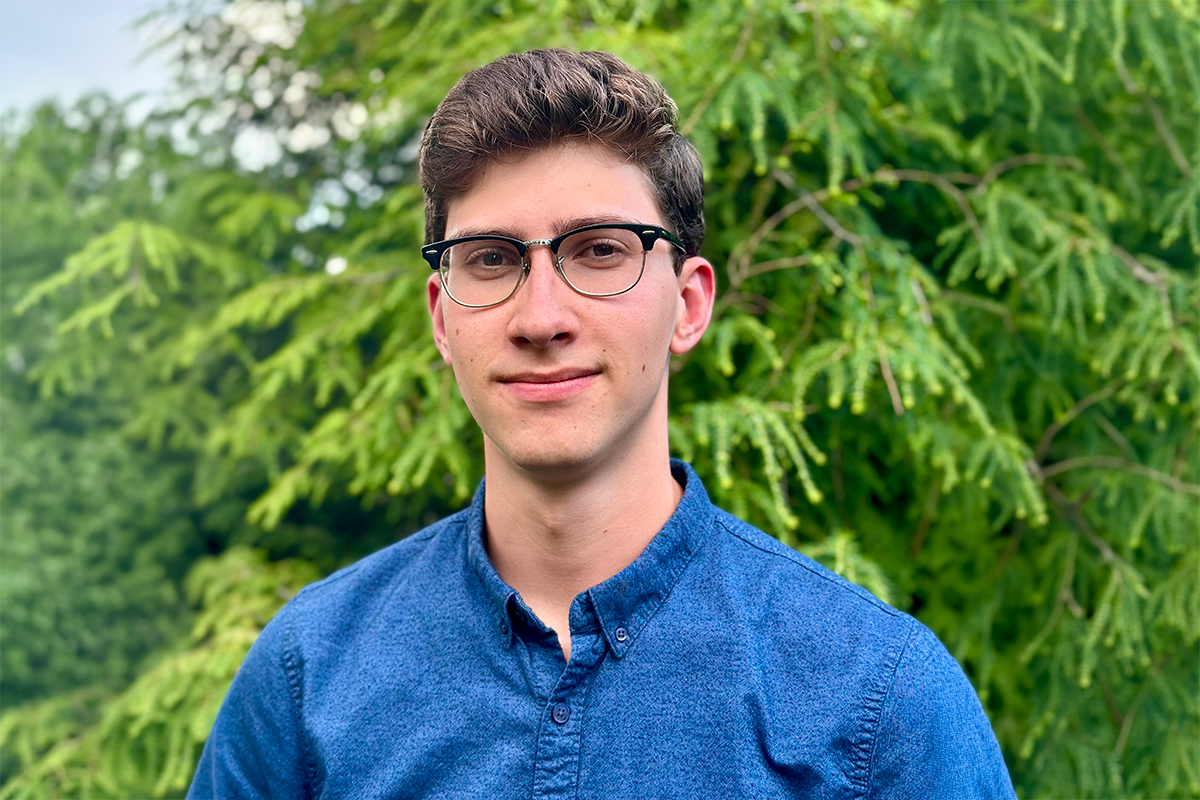
Lucas McCauley Portrait. Courtesy photo.
Lucas McCauley, E’26, bioengineering and biochemistry, has a constant curiosity of the limits of the human body combined with engineering. With a motivation to help other people through research, McCauley has been awarded the Fulbright RCSI PhD Award and will pursue his PhD at the Royal College of Surgeons in Ireland, researching novel ways to model and treat chronic lung disease.
Lucas McCauley recently completed a bachelor’s degree in bioengineering and biochemistry. His interest in science goes back to middle school, when he came across biomedical engineering at a career fair and was immediately drawn in. He has always been in awe of the human body and scientific advancements that allow even engineering of human organs. In high school, McCauley thrived in classes like AP Biology and Chemistry, so when graduation came, he was eager to continue his scientific education.
He first heard of Northeastern through his brother, who had also attended. Once he did more research, he found the Co-op Program, and noticed that his brother was employed by the same company he would later co-op with. Since he wasn’t yet sure whether his future lay in research, industry, or medicine, he saw the program’s hands-on professional opportunities as essential for figuring that out. Northeastern’s academic reputation and Boston location sealed the decision, and he applied as a combined bioengineering and biochemistry major. The biochemistry side also appealed to him because, at the time, he was considering medical school.
Research and extracurriculars

McCauley (top row, right) stands with the lab team and Prof. Ebong in ISEC. Courtesy photo.
McCauley’s most recent project at the Ebong Lab involved studying the blood-brain barrier—the highly selective filtering system that controls what substances can pass from the bloodstream into the brain. Working alongside PhD student Nicholas O’Hare, he studied how a protective sugar-protein coating on the inside of blood vessels, known as the glycocalyx, affects how permeable that barrier is. Disruptions to this barrier have been linked to Alzheimer’s disease, and McCauley’s role involved analyzing data to determine whether damage to the glycocalyx plays a role in that breakdown. Previously, he focused on atherosclerosis, the narrowing of blood vessels that cause greater blood clot and other blood vessel risks. In this condition the vessels stiffen, and McCauley specifically studied how the stiffening of the blood vessel affected the glycocalyx.
His time at Ebong Lab has inspired McCauley to continue his research career. He was able to contribute to several publications from the lab, which he shares is “very helpful in terms of finding future positions, but also just understanding the writing process and what is necessary in order for a paper to be ‘publication ready’”. The experience has also given him confidence in his own abilities, having developed the technical skills and stamina that long-term research demands.

McCauley’s capstone project investigated the peel mechanics of the stratum corneum (top layer of skin). Courtesy photo.
Outside of his studies and research, McCauley has thrown himself into student life at Northeastern. One club that stood out to him was Innovators for Global Health (IGH), an organization that worked with different hospitals and universities in Ghana, designing and building medical devices that fit the needs of the patients and environment. McCauley aided the team in making their devices, combining his biological and engineering skills. He enjoyed being able to use his knowledge in a tangible way that would produce real results and help others along the way. Another club that McCauley enjoyed was the Biochemistry Club on campus, where he found a community of peers in his major and gained a clearer picture of the career paths available to him. The club connected him with both fellow students and advisors who understood exactly where he was coming from.
Co-op opportunities
McCauley completed two co-ops at Northeastern, with the first being at UCB, a pharmaceutical company headquartered in Belgium that develops treatments for neurological and immune system diseases. As a protein scientist, his job was to help the large-scale production of proteins for therapeutic development. As his first industry experience, it taught him a great deal about how large pharmaceutical companies operate and helped him identify the kind of work environment he thrives in. While he discovered protein sciences was not the direction he wanted to pursue long-term, he appreciated learning fundamental skills in protein production. McCauley notes that the most important thing he learned was not just how research fits into industry, but where he could fit into industry, and the qualifications he would need to succeed in these careers.
His second co-op was at Institute of Organic Chemistry and Biochemistry in Boston, a local branch of an academic organization from Prague. There, he was given his own independent research project to investigate unusual, lesser-known functions of proteins found in mitochondria—the structures inside cells responsible for producing energy. Being given that independence and trust, he was able to build a lot of confidence in the lab and in his future ambitions. By completing independent research, he proved to himself that he had the capabilities to continue his research into higher education, helpful to know before committing half a decade to a PhD program.
Mentorship and advice
McCauley joined Associate Professor Eno Ebong’s lab in his second year at Northeastern, and has valued her continued mentorship ever since. He commends her vast knowledge and her ability to give advice. McCauley admires her assurance and open mind, stating that “she has so much confidence in what she is talking about but is also not afraid to change her way of thinking if you bring up a good point.” Professor Ebong cares about her students and has also given him a fuller picture of what a successful academic career can look like alongside a fulfilling personal life. He also highlights Associate Professor Anand Asthagiri, complimenting his extraordinary teaching skills. McCauley praises his ability to break down complex scientific concepts in a way that is clear and accessible, and calls Asthagiri “an incredible professor.”

Newly graduated McCauley stands outside the Bioengineering teaching lab in ISEC. Courtesy photo.
One piece of advice McCauley has for bioengineering majors is to include biochemistry in their coursework, especially if they are interested in the cellular level. While bioengineering gives students the necessary technical knowledge and mindset to succeed, biochemistry fills in the finer details of how biological systems actually work. McCauley found that this mixture has set him up for success in both his research and internship experiences.
He also strongly recommends talking to as many people as possible—in the lab, at work, or at club meetings. Building those connections exposed him to a wide range of perspectives and opened doors he didn’t expect. One conversation with his supervisor during his most recent co-op, for example, inspired him to apply for the Fulbright Scholarship, a path he hadn’t previously considered.
The future
As an avid researcher, McCauley wishes to continue to work in the lab. He has since been awarded the Fulbright RCSI PhD Award through the Royal College of Surgeons in Ireland, and will pursue his PhD there. His research will focus on novel ways to model the mechanical and inflammatory cues of a diseased lung alveolus, how these factors impact cell behavior, and potential nucleic acid therapeutic avenues for chronic lung disease. McCauley’s principal motivation is to “help people through the work that I do, and ultimately impact the world in a good way.” He has come to see research as a powerful way to help even indirectly, by deepening the scientific understanding that others can use to develop better treatments. Through McCauley’s ambition and experience, he will continue to study the human body that he has always been fascinated by, creating discoveries that will ultimately lead to the betterment of human health.