Identifying Genetic Markers That May Help Peripheral Artery Disease Patients Avoid Amputations
Northeastern researchers, including BioE Assistant Research Professor Saeed Amal based at the Roux Institute, identified 38 genetic variants linked to an increased risk of limb amputation in patients with peripheral artery disease, paving the way for earlier, personalized interventions.
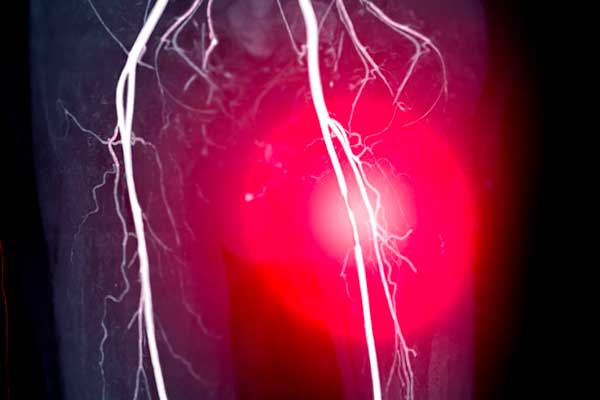
This article originally appeared on Northeastern Global News. It was published by Cesareo Contreras. Main photo: Peripheral artery disease is one of the most common cardiovascular conditions in the world. New Northeastern research could help lay the foundation for new preventive treatments. Photo by Getty Images
This research could help patients avoid amputations
Peripheral artery disease affects 12 million Americans. Northeastern researchers found 38 genetic variants linked to higher amputation risk.
Physicians may one day be able to identify which patients with peripheral artery disease are most likely to develop complications and intervene earlier, thanks to a Northeastern University discovery.
Peripheral artery disease is a common condition in which arteries found in the legs, arms and pelvis are partially or completely obstructed as a result of plaque buildup.
A serious complication of the disease is limb loss, and approximately 150,000 leg amputations are performed in the U.S. as a result every year, according to the American Heart Association.
But doctors can’t yet predict which of the approximately 10 million to 12 million people in America who have peripheral artery disease will need an amputation.
New research published in the International Journal of Molecular Sciences has found, however, that patients most susceptible to limb amputations may share similar genomic traits.

Saeed Amal, a research professor of bioengineering at the Roux Institute, said this research, could help doctors to develop more “personalized interventions” for patients. Photo by Matthew Modoono/Northeastern University
While more testing and verification need to be done to validate their findings, the Northeastern researchers’ insights could help physicians develop tests to determine the likelihood of a patient losing a limb if diagnosed with peripheral artery disease, according to Saeed Amal, a Northeastern University research professor of bioengineering based in the Roux Institute and one of the co-authors of the paper.
“This is powerful because you won’t have to wait for symptoms,” Amal said, noting that oftentimes when peripheral artery disease patients start complaining about pains in their arms and legs, it’s too late to save their limbs. “It will allow us to give treatment before the patients start suffering and could basically prevent amputation.”
Research on peripheral artery disease so far has shown that risk factors such as smoking and poor diet can lead to a peripheral artery disease diagnosis, but scientists are still working to understand what role genetics play in the onset and progression of the disease, explained Amal.
Read full story at Northeastern Global News