Designing and Developing Intelligent Systems
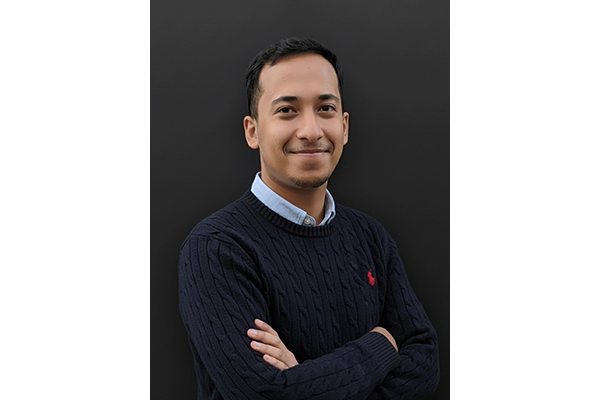
Arslan Parkar, MS’26, information systems, at Northeastern, has been at the forefront of designing and developing innovative projects that create solutions using AI to address complex problems.
Arslan Parkar is currently pursuing a master’s in information systems. He earned his bachelor’s degree in artificial intelligence and data science from the University of Mumbai. During his undergraduate studies, he founded a technology consultancy, Infobay, where he served as Technology Head and developed a range of machine learning and full-stack solutions for enterprise clients. Prior to that, he worked as an associate technologist at Blustream Integrated and began his career with a full-stack development internship at Digitalbeej.
Parkar’s motivation to join Northeastern University stemmed directly from his experience at Infobay. Through his work, he realized that there were gaps in his skill set that limited his ability to build more sophisticated and scalable solutions. He recognized the need to expand beyond pure machine learning into areas such as data engineering, advanced computer vision and formal project management. Northeaster’s MS in information systems program stood out to him because it offers the ideal balance between cutting-edge technology and practical business applications. Additionally, Boston’s strong entrepreneurial ecosystem was a major draw, providing valuable opportunities to build on his startup experience and scale it to the U.S. market.
Parkar shares that he was inspired and influenced by many faculty members during his time at Northeastern, but two stood out. Associate Teaching Professor Nicholas Brown’s “Prompt Engineering course” completely transformed his perspective on how large language models can be applied across a wide range of projects. Similarly, Teaching Professor Dino Konstantopoulos demonstrated how data science and machine learning can be leveraged to address complex, large-scale data challenges and apply those skills across diverse industries.
Pioneering Research in Digital Media
Soon after starting at Northeastern, Parkar secured an opportunity to work as a research assistant at the Center for Transformative Media (CTM) within the College of Arts, Media and Design. There, he works at the forefront of digital culture under the guidance of Professor Adriana de Souza e Silva, contributing his software development expertise to two key initiatives: The Retro Mobile Gaming Project (RMGP). Where Parkar helped to build the software systems for this comprehensive resource, which is designed to study the history and cultural impact of mobile games. This research is vital for preserving a critical part of digital culture and understanding the evolution of interactive media. The second initiative was The Mobile Networked Creativity (MNC) Initiative where He also contributes to the software development for this initiative, which explores the inventive ways people facing challenging circumstances creatively repurpose mobile technology. This investigation sheds light on grassroots innovation and the role of technology in fostering community resilience.
For both research projects, Parkar utilizes a modern tech stack including TypeScript, Next.js, and AWS to build scalable systems. Demonstrating his ability to translate research into practice, he also developed an innovative AR-based game for the CTM’s “Media in Motion” symposium. For Parkar, being directly involved in this hands-on research, rather than simply reading about it, has been one of the most rewarding aspects of his Northeastern experience.
Parkar shares that Northeastern’s co-op program was one of the most significant factors in his decision to join the university. The opportunity to gain hands-on industry experience in the United States, while studying, has been invaluable to him. Although he hasn’t started his placement yet, he has already secured a co-op for January 2026 as an ML engineer intern at Infineon Technologies. This role is an ideal fit for his career goals, as he will be developing machine learning models for irregular frequency detection and implementing reinforcement learning techniques. Even before graduating, the program has given him a clear pathway to apply his academic knowledge directly to the kind of industry challenges he hopes to address.
Parkar also expresses his gratitude to his co-op advisor, Brandon Morris, who served as a key mentor during his search process and provided guidance that made securing his placement much smoother.
Projects and Innovations
Parkar’s passion for building impactful technology is most evident in his ambitious personal projects, which showcase his expertise in both deep learning and complex system design.
An AI-Powered Fashion Platform
Parkar is developing a transformative fashion platform to address a fundamental challenge: today’s fashion world is a vibrant but fragmented universe, scattered across countless social platforms and disconnected shopping experiences. This project’s vision is to create a unified hub where the industry lacks a dynamic ecosystem where style, community and technology converge. It’s envisioned as a space where fashion enthusiasts can immerse themselves in a world of inspiration, shaped by a select community of influencers and creators.
The true transformation happens at a personal level. The platform’s AI engine acts as an intelligent personal stylist, fundamentally changing a user’s relationship with their own wardrobe. By uploading photos of their clothes, the AI understands and catalogs each piece, unlocking the hidden potential of what they already own. It then curates a personalized calendar with daily outfit suggestions, intelligently designed to encourage creativity and minimize repetition. Through reinforcement learning, this digital stylist grows with the user, constantly refining its recommendations to perfectly match their evolving taste.
This deep personalization fuels a new fashion economy. The platform moves beyond simple advertising to foster authentic collaborations between creators and brands. Influencers can seamlessly integrate shoppable links into their content, while brands can tap into a data-driven marketplace, leveraging real-time insights into emerging trends to connect with their audience in a more meaningful and effective way. Ultimately, this project is more than an app; it’s a movement to centralize fashion discovery, social interaction, and commerce into a single, powerful experience.
AI for Medical Diagnostics: An Interpretable RAG System
Addressing the “black box” problem in medical AI, Parkar developed a diagnostic tool for analyzing chest X-rays. The system uses a powerful deep learning model (CheXNet) to detect abnormalities. It then integrates this with a Retrieval-Augmented Generation (RAG) pipeline using LangChain. This innovative approach allows medical professionals to not only get a diagnosis but to ask conversational, natural-language questions. The system retrieves information from a vast medical knowledge base to provide answers that are explained and evidence-based, dramatically enhancing the trust and interpretability of the findings.
Future Perspectives
Looking ahead, Parkar aspires to become a machine learning architect, focusing on building impactful products that deliver sustainable AI solutions to address complex challenges across a wide range of industries. He is passionate about being at the forefront of designing and developing intelligent systems that will help shape the future.
Reflecting on his time at Northeastern, Parkar shares that the most valuable aspect of his journey has been the environment. The combination of rigorous academics, hands-on research opportunities, real-world co-op experience, and access to a network of brilliant and supportive faculty has been transformative.
“Northeastern was more than just a degree; it was the catalyst that gave me the tools, structure, and confidence to pursue my long-term goals,” Parkar expresses. “I’m excited to take everything I’ve learned here and apply it to the next chapter of my career.”