Why U.S Drivers Aren’t Switching to Electric Vehicles
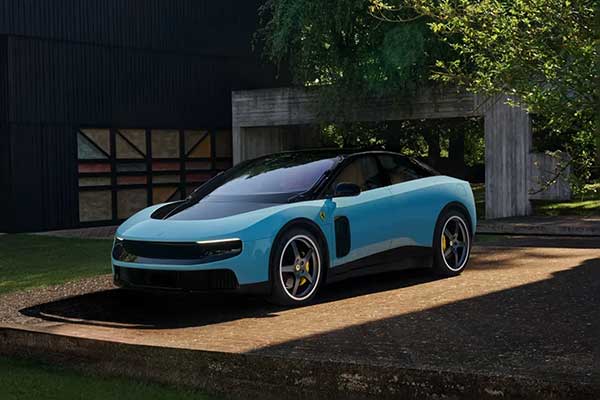
The new Ferrari Luce, an all-electric vehicle, has drawn commentary for its looks and its $640,000 price tag.
The gas prices have soared since the War in Iran, but Americans are still not buying into the electric vehicle industry. MIE Assistant Professor Juner Zhu and others explain the variables that may be influencing their decisions.
This article originally appeared on Northeastern Global News. It was published by Cyrus Moulton.
Gas nears $5. Why aren’t electric vehicles selling in the US?
With gas averaging $4.50 per gallon in the United States, and the international waterway through which 20% of the world’s oil flows effectively closed, it might seem like a good time for Americans to buy an electric vehicle.
Instead, EV sales in the US are projected to fall from 1.5 million to 1.2 million this year, according to the International Energy Agency (IEA), an organization that works with governments and industry to shape a secure and sustainable energy future. Meanwhile, Car and Driver magazine reports that auto manufacturers from Acura to Volvo have recently canceled or discontinued their EV models.
Why the disconnect?

Photo by Matthew Modoono/Northeastern University
“The market is not a simple, single-variable function,” said Juner Zhu, an associate professor of mechanical and industrial engineering at Northeastern who researches battery sustainability. “The market depends somewhat on the cost of EV compared to gasoline-powered vehicles, but there are more variables.”
The US Department of Energy cites a state of Vermont law that defines an EV as a vehicle that can be powered by an electric motor that draws electricity from a battery and is capable of being charged from an external source. This technically includes vehicles that are only powered by an electric battery and hybrid electric vehicles, those that can use gas as well as some electricity
The picture elsewhere looks different as, globally, electric vehicles are going strong.
Approximately 20 million EVs were sold across the world in 2025, according to the IAE, growing 20% from 2024. This year, EV sales are expected to rise to 23 million and account for nearly 30% of all cars sold worldwide, according to the newest edition of the IEA’s annual Global EV Outlook. A lot of that growth is happening in China, where 55% of new vehicles sold were EVs, according to the report. Meanwhile, EV battery prices have fallen by 99% in the past 30 years, according to Our World in Data, a project of the Global Change Data Lab, a nonprofit organization based in the United Kingdom.
These statistics make the IEA seem optimistic overall about EVs.