
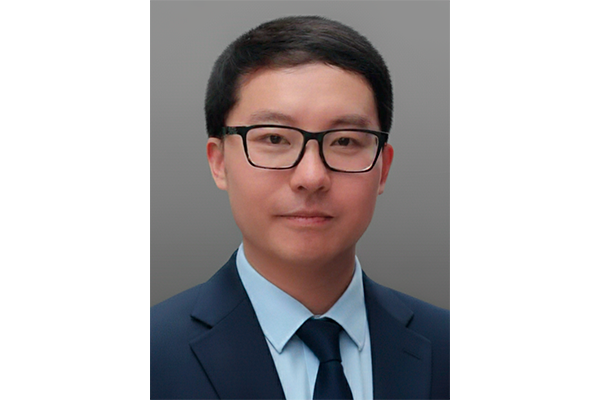
Yinnian (Andy) Feng
Assistant Professor,
Bioengineering
Office
- 328 ISEC
Research Focus
Leveraging high-throughput mechanoimmunology to systematically investigate how immune cells sense mechanical forces and translate that knowledge into therapy
About
Dr. Feng is an Assistant Professor in the Department of Bioengineering. His general research interests lie in pioneering a new field: mechanoimmunology. His lab aims to advance high-throughput microfluidic tools and biophysical assays to systematically dissect mechanoimmunology and leverage principles from this emerging field to realize a novel mechano-immunotherapy.
Dr. Feng received his Ph.D. in Chemical & Biomolecular Engineering from Vanderbilt University, where he developed biophysical assays to investigate the biomechanical features of T-cell activation using optical trapping (OT) in Prof. Matthew Lang’s lab. His work shows great promise for developing novel T-cell therapies. However, OT is low throughput (~400 cells/year), making it difficult to scale beyond the laboratory. To address this limitation, he joined Prof. Polly Fordyce’s lab at Stanford University for his postdoctoral training to develop microfluidic platforms for high-throughput mechanoimmunology (>1,000 cells/day). After his postdoctoral training, he transitioned to industry as a Senior Microfluidics Scientist at Merck, where he invented and applied scalable microfluidic technologies for industrial applications.
His independent laboratory will utilize microfluidics to systematically investigate T-cell mechanosensing across scales ranging from molecular receptors to whole-cell dimensions. These high-content, high-throughput bioassays will help (1) generate gold-standard datasets to train AI-based models and (2) understand and ultimately manipulate T-cell activation through mechanomodulation, paving the way for mechano-immunotherapy for patients with infectious diseases, cancers, and autoimmune diseases.
Education
- Senior Scientist, Merck, 2021-2025
- Postdoc, Genetics, Stanford University, 2018 – 2021
- Ph.D., Chemical and Biomolecular Engineering, Vanderbilt University, 2012 – 2018
- M.S., Chemical Engineering and Technology, Tianjin University, 2009-2012
- B.S., Chemical Engineering and Technology, Tianjin University, 2005-2009
Honors & Awards
- Best Poster Award at PRD-ET Scientific Summit, Merck 2024
- Stanford BioX Seed Grant 2020
- CRI Irvington Postdoctoral Fellowship, Cancer Research Institute 2019
- Best Presentation Award in Stanford ChEM-H Postdoc Retreat, Stanford University 2019
- Outstanding graduate student research paper in the School of Engineering, Vanderbilt University 2018
- Best Research Paper Award in ChBE, Vanderbilt University 2018
- Biophysical Society Education Travel Award 2017
Teaching Interests
- BIOE 2365 Bioengineering Measurement, Experimentation, and Statistics
- Mechanoimmunology
- Hands-on microfluidics
Research Overview
Leveraging high-throughput mechanoimmunology to systematically investigate how immune cells sense mechanical forces and translate that knowledge into therapy
T cell therapies based on lab-engineered T-cell receptors (TCRs) have the potential to transform the treatment of cancer and autoimmune disease, yet their clinical impact is limited by insufficient specificity and dangerous off-target effects. In vivo, T cells achieve extraordinary discrimination between self and non-self antigens, a capability that engineered TCRs often fail to recapitulate. Growing evidence suggests that mechanical forces experienced by T cells are a missing dimension of antigen recognition and immune decision-making. My research seeks to uncover how mechanical cues across scales reshape T-cell activation and specificity. By developing and applying high-throughput microfluidic technologies, I aim to translate T-cell mechanosensing principles into mechano-immunotherapies that achieve precise, on-target, and site-specific immune intervention.
The Feng Lab
Department Research Areas
Selected Publications
Peer-reviewed journal articles (original research):
- Feng, Y., Zhao, X., White, A.K., Garcia, C.K., and Fordyce, P.M. (2022). “A bead-based method for high- throughput mapping of the sequence- and force-dependence of T-cell activation”, Nature Methods 19(10), 1295-1305.
- Technology highlighted in “Method to Watch in 2023”: Mukhopadhyay M. (2023) “Immunomechanics”, Nature Methods 20, 35.
- Research Briefing: Fordyce, P.M. and Feng, Y. (2022). “BATTLES: high-throughput screening of antigen recognition under force”, Nature Methods 19, 1189–1190.
- Akitsu, A., Kobayashi E., Feng, Y., Stephens, H.M., Brazin, K.N., Masi, D.J., Kirpatrick, E.H., Mallis, R.J., Duke-Cohan, J.S., Booker M.A., Cinella V., Feng W.W., Holliday E.L., Lee J.J., Zienkiewicz K.J., Tolstorukov M.Y., Hwang W., Lang M.J., Reinherz E.L. (2024). “Parsing digital or analogue TCR performance through piconewton forces”, Science Advances, 10, eado4313.
- Emmert M.H., Bottecchia C., Barrientos R., Feng Y., Holland-Moritz D., Hughes G., Lam Y.H., Regalado E., Ruccolo S., Sun S., Chmielowski R., Yang C., Lévesque F. (2024). “Build your own” ADC mimics: Identification of non-toxic linker/payload mimics for HIC-based DAR determination, high-throughput optimization, and continuous flow conjugation”, Organic Process Research & Development, 28(8), 3326- 3338.
- Hein, J.B., Nguyen, H.T., Garvanska, D.H., Nasa, I., Kruse, T., Feng, Y., Lopez-Mendez, B., Davey, N., Kettenbach, A.N., Fordyce, P.M., and Nilsson, J. (2023). “Global substrate identification and high throughput in vitro dephosphorylation reactions uncover PP1 and PP2A-B55 specificity principles”, Molecular Systems Biology, e11782.
- Zhao, X., Kolawole, E.M., Chan, W., Feng, Y., Yang, X., Jude, K.M., Sibener, L.V., Fordyce, P.M., Germain, R.N., Evavold, B.D., and Garcia, C.K. (2021). “Tuning T cell receptor sensitivity through catch bond engineering”, Science 376(6589): eabl5282.
- Feng, Y., White, A.K., Hein, J.B., Appel, E.A., and Fordyce, P.M. (2020). “MRBLES 2.0: High-throughput generation of chemically functionalized spectrally and magnetically-encoded hydrogel beads using a simple single-layer microfluidic device”, Microsystems and Nanoengineering 6(1), 1-13.
- Ong, L.L.S., Zhu, H., Banik, D., Guan, Z., Feng, Y., Reinherz, E.L., Lang, M.J., and Asada, H. (2019). “A robotic microscope system to examine T cell receptor acuity against tumor neoantigens: A New Tool for Cancer Immunotherapy Research”, IEEE Robotics and Automation Letters 4(2), 1760–1767.
- Brazin, K.N., Mallis, R.J., Boeszoermenyi, A., Feng, Y., Yoshizawa, A., Reche, P.A., Kaur, P., Bi, K., Hussey, R.E., Duke-Cohan, J.S., Song, L., Wagner, G., Arthanari, H., Lang, M.J., and Reinherz, E.L. (2018). “The T-cell receptor α bipartite transmembrane domain coordinates antigen triggering by regulating bilayer immersion, CD3 association and transcriptomes”, Immunity 49(5), 829–841.
- “Editor’s choice” of Science Signaling by Williams, E.R. “The basics of mechanotransduction” 11(556), eaau2223.
- “Editor’s choice” of Science Translational Medicine by Hinrichs, C.S. “T cell receptors communicate by movement” 10(471), eaaw0522.
- Previewed by Lichauco, K., Lee, M.S., and Kuhns, M.S. (2018). “Bonds Voyage! A Dissociative Model of TCR-CD3 Triggering Is Proposed” Immunity 49(5), 786-788.
9. Feng, Y., Brazin, K.N., Kobayashi, E., Mallis, R.J., Reinherz, E.L., and Lang, M.J. (2017). “Mechanosensing drives acuity of αβ T cell recognition”, Proceedings of the National Academy of Sciences 114, E8204- E8213.
-
- “From the cover” paper, and commented by James, J.R. (2017). “Using the force to find the peptides you’re looking for.” PNAS 114, 10303-10305.
10. Brady, S.K., Sreelatha, S., Feng, Y., Chundawat, S.P.S., and Lang, M.J. (2015). “Cellobiohydrolase 1 from Trichoderma reesei degrades cellulose in single cellobiose steps”, Nature Communications 6, 10149.
11. Das, D.K., Feng, Y., Mallis, R.J., Li, X., Keskin, D.B., Hussey, R.E., Brady, S.K., Wang, J.-H., Wagner, G., Reinherz, E.L., and Lang, M.J. (2015). “Force-dependent transition in the T-cell receptor β-subunit allosterically regulates peptide discrimination and pMHC bond lifetime”, Proceedings of the National Academy of Sciences 112 (5), 1517-1522.
12. Hou, X., Feng, Y., Zhang, P., Wei, H., and Dang, L. (2015). “Selective crystal growth of theophylline- saccharin cocrystal on self-assembled monolayer from incongruent system”, Crystal Growth & Design 15 (10), 4918-4924.
13. Feng, Y., Dang, L., and Wei, H. (2012). “Analyzing solution complexation of cocrystals by mathematic models and in-situ ATR-FTIR spectroscopy”, Crystal Growth & Design 12(4), 2068-2078.
14. Li, L., Jiang, Z., Wu, H., Feng, Y., and Li, J. (2009). “Protamine-induced biosilica as efficient enzyme immobilization carrier with high loading and improved stability”, Materials Science and Engineering: C 29 (6), 2029-2035.
Peer-reviewed reviews:
- Feng, Y., Reinherz, E.L., and Lang, M.J. (2018). “αβ TCR mechanosensing forces out serial engagement”, Trends in Immunology, 39(8), 596-609.
- Brazin, K.N., Mallis, R.J., Das, D.K., Feng, Y., Hwang, W., Wang, J.-h., Wagner, G., Lang, M.J., and Reinherz, E.L. (2015). “Structural Features of the αβTCR Mechanotransduction Apparatus That Promote pMHC Discrimination”, Frontiers in Immunology 6.
Book chapters:
1. Stephens, H.M., Brazin, K.N., Mallis, R.J., Feng, Y., Banik, D., Reinherz, E.L., and Lang M.J. (2022). “Measuring αβ T-cell receptor-mediated Mechanosensing using optical tweezers combined with fluorescence imaging”, Optical Tweezers: Methods and Protocols, 727-753.
Abstracts not published in other forms:
- Feng, Y., Brazin, K.N., Kobayashi, E., Mallis, R.J., Reinherz, E.L., and Lang, M.J. (2018). “Biophysical features of the αβTCR mechanome that drive high avidity T-cell recognition”, Biophysical Journal 114 (3), 201a.
- Reinherz, E.L., Mallis, R.J., Das, D.K., Feng, Y., Hwang, W., Wang, J.-h., Wagner, G., Lang, M.J., and Brazin, K.N. (2016). “G-101 Special lecture: The T cell receptor is a mechanosensor”, JAIDS Journal of Acquired Immune Deficiency Syndromes 71, 64.
Mar 11, 2026
Improving the Ability of Immune Cells to Distinguish Tumor Cells from Healthy Tissue
BioE Assistant Professor Yinnian Feng and an international team of researchers have published a breakthrough study in Cell titled “Tuning the sensitivity of mechanosensory receptors through histidine scanning.”
Dec 11, 2025
New Faculty Spotlight: Yinnian (Andy) Feng
Yinnian (Andy) Feng joins the bioengineering department in January 2026 as an Assistant Professor.