BioE PhD Students Receive 2026 AHA Predoctoral Fellowships
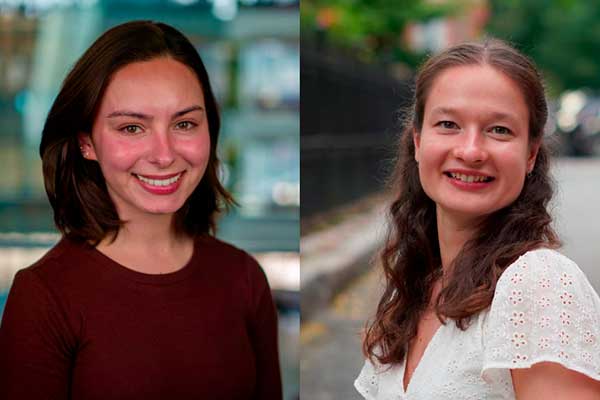
Catherine Karpova, PhD’27, and Stefanie DeFronzo, PhD’27, bioengineering, in BioE Professor Guohao Dai’s lab, were awarded 2026 American Heart Association Predoctoral Fellowships. Their research focuses on innovative approaches to address cardiovascular disease (CVD) and inherited bleeding disorders, offering potential breakthroughs for millions of patients worldwide.
Karpova’s research aims to improve cardiac tissue models for research on cardiovascular disease (CVD), which remains the leading cause of death worldwide. To study the characteristics of CVD and potential treatments, researchers have developed engineered cardiac tissue models using human pluripotent stem cell-derived cardiomyocytes (hPSC-CMs). However, current models are limited by a lack of functional vasculature and the immaturity of CM cells. Karpova plans to address these limitations by integrating cardiac-specific endothelial cells (ECs)—which could accelerate CM maturation via fatty acid transport and bi-directional signaling—and by introducing fluid flow to the model to more closely emulate physiological vascularity. Her three specific aims are: to generate validated cardiac ECs for fatty acid uptake, to combine them with hPSC spheroids to observe vascularization’s impact on mature heart tissue development, and to assess how fluid dynamics influence cardiac differentiation and maturity through calcium signaling and marker expression analysis.
DeFronzo’s proposal focuses on Hereditary Hemorrhagic Telangiectasia (HHT), an inherited disorder in which abnormal blood vessel formation leads to increased bleeding, clotting dysfunction and potentially organ damage. Current treatments for HHT are limited to invasive procedures with high recurrence rates, with no preventive therapies existing currently. DeFronzo’s project introduces a groundbreaking “disease in a dish” model using CRISPR-edited hPSCs to simultaneously differentiate multiple vascular cell types representative of HHT pathology, without the need for time-consuming cell sorting or non-uniform organoids. This novel HHT model will enable identification of therapeutic targets and screening of drugs for early intervention, shifting HHT treatment from reactive care to preventive therapy, while also providing a scalable framework for broader vascular disease research.
Source: Institute of Mechanobiology