Advancing Skills in Pharmaceutical Engineering
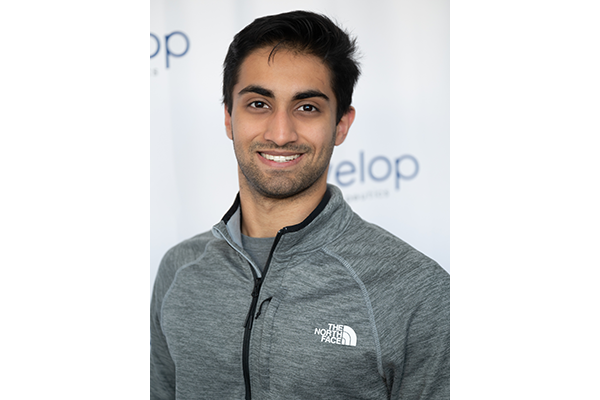
Aniketh Tathachar, MS’25, pharmaceutical engineering, became highly interested in the pharmaceutical industry after completing his first internship. Through Northeastern’s pharmaceutical engineering master’s program, Tathachar has expanded his knowledge of the industry and developed the skills necessary for a successful career.
During Aniketh Tathachar’s undergraduate studies, he first gained exposure to the biotech and pharmaceutical industries through an internship with Takeda. This experience sparked his curiosity for the pharmaceutical space and inspired him to change his concentration to biochemistry.
After graduating with a bachelor’s degree in biomedical engineering, Tathachar remained highly interested in the pharmaceutical industry. He decided to pursue a master’s degree in pharmaceutical engineering from Northeastern University. The most compelling feature that drew him to apply was Northeastern’s highly-ranked co-op program. While the pharmaceutical engineering program is relatively new, Tathachar believes the program offers a plethora of incredible experiential learning opportunities which have allowed him to grow as an engineer.
Co-op Experience
While at Northeastern, Tathachar completed a co-op at nChroma Bio, formerly known as Nvelop Therapeutics. nChroma Bio is a genetic medicines company that develops delivery technologies for gene editing therapeutics. Tathachar worked as a particle engineer co-op, focusing on creating an automated transfection system for virus-like particle (VLP) production.
VLPs are engineered delivery vehicles that can transport gene editing tools like base editors or prime editors to target cells. To manufacture VLPs, producer cells must be transfected with multiple plasmids encoding different components: structural proteins that form the VLP scaffold, envelope glycoproteins that determine which cell types the VLP can target, and the therapeutic cargo (such as gene editing enzymes and guide RNAs). When these plasmids are introduced into producer cells, the cells assemble complete VLPs containing the gene editing payload.
The surface glycoproteins allow VLPs to bind to specific receptor proteins on target cells and facilitate cellular uptake through endocytosis. Once inside the target cell, the VLP delivers its gene editing cargo. Tathachar developed an automated device to streamline the transfection process for producing these therapeutic VLPs more efficiently.
Tathachar said the most memorable experience during his time at nChroma Bio was successfully getting his automated transfection device to work. He said completing this process was incredibly satisfying, and he felt a sense of pride in being successful in this project. The co-op experience gave him valuable industry exposure and helped him identify which areas of the pharmaceutical industry he wants to explore further in his career and research.
This co-op experience introduced Tathachar to epigenetic editing. This exposure led to fascination, feeding a desire to perform research, which ultimately inspired Tathachar to start working at the Lab of Addiction Genetics.
Research at the Lab of Addiction Genetics
After his co-op, Tathachar began conducting research at the Lab of Addiction Genetics with Professor Cameron Bryant. In this lab, Tathachar worked on various projects centered around addiction genetics. In one project, he was creating an analog of oxycodone, which was given directly to the mice into their brains through cannulation—using a thin tube or cannula. The goal of this project is to detect where oxycodone is being metabolized in the brain. Tathachar and his team developed this project by first looking at the molecular component of oxycodone and found that the main active metabolite is oxymorphone.
The researchers needed to synthesize a labeled version of oxycodone that could be tracked in mouse brains. They incorporated carbon-13 (C-13) into the methyl group and added two deuterium atoms to create a compound that could be monitored using analytical techniques. When administered to mice, this labeled oxycodone undergoes metabolism to form oxymorphone, with the C-13-labeled methyl group being cleaved off in the process. By tracking this labeled methyl fragment, they could determine where in the brain oxycodone metabolism occurs.
This research project is not complete yet; Tathachar and his team still must dose the mice with the compound. The C-13 labeling is particularly clever because it allows them to track not just where the original drug goes, but specifically where it’s being chemically transformed – which is crucial for understanding both therapeutic effects and potential toxicity. Tathachar has taken the lead in the chemistry aspect of the project and is excited to complete the research and see the results.
Classroom Opportunities
Tathachar said “Pharmaceutical Engineering 1” and “Pharmaceutical Engineering 2,” taught by Assistant Professor Benjamin Woolston, were invaluable in preparing him for what to expect in the industry. He said these two courses cover a broad range of topics that are both useful and a great combination of theoretical and practical topics.
Tathachar found his pharmaceutical engineering lab particularly interesting and helpful in developing his bioprocessing skills. His main project involved optimizing bacterial protein production using E. coli engineered to express red fluorescent protein. He worked on both upstream processes (culturing the bacteria in bioreactors to achieve optimal cell density) and downstream processes (harvesting the cells and purifying the target protein they produced).
He credits the introductory courses and lab as extremely beneficial for him and his career. He built a strong foundation in the basics of the subject, as well as strengthened and developed a lot of important skills needed in the field.
Future Perspectives
Tathachar is currently working at Blueprint Medicines, a biopharmaceutical company, while finishing the last of his master’s courses before graduating this December. Tathachar said his co-op experience really influenced the way he views biology and pharmaceutical science. This has inspired him to pursue a PhD and continue exploring pharmaceutical endeavors.