Exploring How K-12 Service-Learning Shapes First-Year Engineering Identity Formation
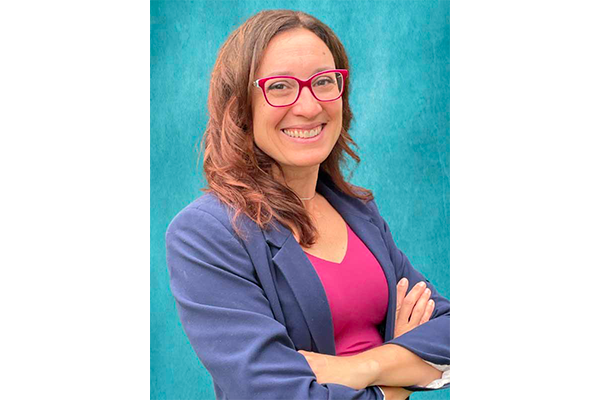
Kathryn Schulte Grahame, teaching professor and associate director of First Year Engineering, in collaboration with co-PIs Merredith Portsmore of Tufts University and David A. Delaine, E’05, electrical engineering, of Florida International University, was awarded a $200K NSF grant for “Engineering Identity Formation Through K-12 Service-Learning: Understanding How Recognition from Young Learners Supports First-Year Engineering Identity”.
The unique two-year RIEF grant focuses on researcher development and mentorship, providing teaching faculty with dedicated support to build advanced pedagogical research skills. Developed during Schulte Grahame’s sabbatical fellowship supported by the Provost’s Office, the collaborative project builds upon Northeastern’s strong institutional foundation in Service Learning (SL) to explore new dimensions in engineering education alongside her undergraduate SL teaching assistants.
Abstract Source: NSF
To address numerous national security and economic challenges, the United States’s engineering profession requires a continuous, and even increasing, supply of recent graduates from accredited undergraduate engineering programs. However, across the country and across disciplines, only about half of the students who start in an undergraduate engineering degree program finish with an engineering degree. Research on engineering identity can help us understand why: undergraduates who do not see themselves as engineers persist to graduation at lower rates than undergraduates who do see themselves as engineers, and first-year engineering students are particularly vulnerable. We need more cost-effective ways to help undergraduate engineering students strengthen their own identities as engineers to help them persist to graduation. This project will investigate an influential aspect of engineering identity – students seeing themselves recognized by others as engineers – and how working with K-12 school children might help. An established program on service learning at Northeastern University pairs first-year undergraduate students with elementary and middle school children, where over a semester, the undergraduate students visit local schools several times, lead hands-on engineering, science, and building activities, and design final projects tailored to the children’s interests. These school-aged students often treat the undergraduate students as real engineering experts, even when the undergraduates still feel unsure about themselves. The project will explore whether the undergraduates’ forming connections with the children helps the undergraduates improve their engineering identity, even though the recognition of that identity comes from children rather than faculty, industry members, or even peers, and subsequently whether that improves undergraduate students’ persistence in their engineering program. This project contributes to the Research Initiation in Engineering Formation program goals through research team members mentoring the project investigator to develop qualitative research expertise in engineering education research, and along with the graduate research assistant, expanding the engineering education research community. Project findings will give undergraduate programs practical, evidence-based, and cost-effective guidance for designing first-year programs that can better encourage undergraduate persistence to graduation.
This project will build on an established service-learning program at Northeastern University that puts first-year undergraduate students into elementary and middle schools multiple times each semester to lead STEAM (science, technology, engineering, art, and mathematics) activities and design customized STEAM experiences for K-12 students. This project will ask the undergraduate students to reflect on their developing relationships with the K-12 students and how that affects their professional identity formation as engineers. Building on theory about empathy as a skill that people can learn through intentional practice that reshapes how people understand engineering, the the research team will study approximately 90 first-year students using student reflections, pre- and post-semester engineering identity surveys, and interviews with a smaller group of 20 to 25 students, guided by two mentors with expertise in K-12 engineering education and service-learning research, and an advisory board of engineering education scholars. In the first year, the research team will collect data from the first cohort of undergraduates and use systematic coding methods to identify empathy indicators and design reasoning across their reflections and interviews. In the second and final year, the research team will collect data from a second cohort of undergraduate students, develop themes that address the research questions, and trace how these themes connect over time to ideas of design investment, confidence, and identity development across individual students. Deliverables from this project will include a two-pathway model of how empathy shapes engineering identity formation and transferable tools that other engineering programs can use to design similar service-learning experiences. The research team will disseminate these products through peer-reviewed journal articles, conference presentations, and engineering education workshops. Ultimately, this work will help engineering programs better support all first-year students as they develop their identities as engineers, as needed to persist to graduation in engineering.