Slavov Receives NIH Director’s New Innovator Award

BioE Assistant Professor Nikolai Slavov was awarded the National Institutes of Health Director’s New Innovator Award and a $2.35M grant to study “Ribosome-Mediated Translational Regulation during Stem Cell Differentiation“.
Source: News @ Northeastern
Direct evidence. It’s the holy grail in scientific discovery.
Nikolai Slavov, assistant professor in the Department of Bioengineering, found that grail in the least likely of places: deep inside ribosomes, the molecular machines in cells that assemble all the proteins that keep living things—from budding yeast to us—functioning.
This month, the National Institutes of Health recognized Slavov’s groundbreaking research with its Director’s New Innovator Award. The five-year, $2.35 million award is part of the NIH Common Fund’s High-Risk, High-Reward Research program, which supports highly creative early-career researchers taking out-of-the-box approaches to major challenges in biomedical research.
Slavov’s work flew in the face of scientists’ decades-long assumption that all ribosomes were the same. Some speculated that their composition, and hence their function, might vary, but no one had been able to provide experimental or observational proof of the claim.
Ribosomes are one of the most fundamental and highly conserved structures in biology. Our work could help reshape our understanding of a central tenet of the field: how information from genes is regulated.
—Nikolai Slavov, assistant professor
Until, that is, Slavov and his colleagues revealed the disparities in full-color schematics last year in a paper published in the journal Cell Reports. The concept of “specialized ribosomes”—that not all ribosomes house the same standard 80 core proteins but rather varieties of them—had finally been validated. The findings could have implications for new directions in fields from cancer therapeutics to regenerative medicine.
“Ribosomes are one of the most fundamental and highly conserved structures in biology,” says Slavov. “The grant will enable me to investigate the specialized ribosome hypothesis further and flush out how the ribosomes’ varying compositions affect their biological function. Our work could help reshape our understanding of a central tenet of the field: how information from genes is regulated.”
Upending conventional wisdom
Before Slavov’s discovery, scientists believed that ribosomes in unperturbed cells had a passive role in the expression of genetic information. A molecule called messenger RNA, or mRNA, picked up protein-assembly instructions—which amino acids to link in a chain and in what order they should link—from genes and delivered them to the ribosome to follow.
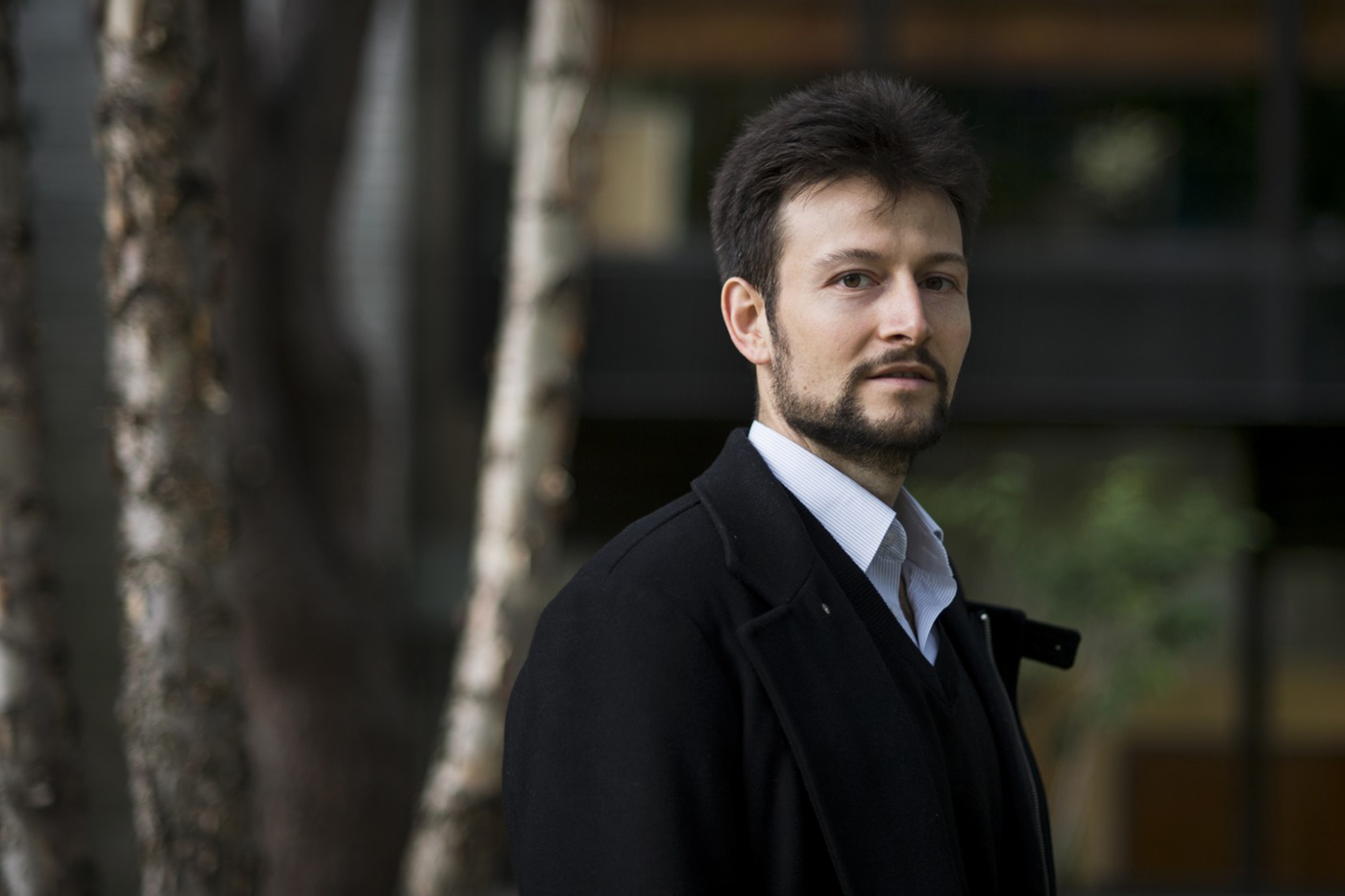
Nikolai Slavov, assistant professor in the Department of Bioengineering Photo by Adam Glanzman/Northeastern University
Slavov’s findings, however, indicated that ribosomes not only assembled proteins, they also appeared to regulate that production. In a sense, a factory line worker had now become a plant foreman. Ribosomes may determine, for example, how many and which types of proteins will be made in specific tissues.
The potential applications are broad. In tissue engineering, for example, if researchers want to program, say, an embryonic stem cell to make a heart cell, they may now have to take into account how to influence the ribosome. If a genetic mutation has led to a core-protein malfunction that contributes to the growth of cancer, researchers may now consider developing drugs that target that ribosomal core protein to restore its function, inhibiting cancer growth.
“The award supports basic research—those applications are in the future,” says Slavov. “But continued validation of my specialized ribosomes hypothesis could one day directly suggest rational therapies for cancers such as glioblastoma, which currently doesn’t have any effective treatment.”
‘Northeastern’s spirit of boldness’
To dive into the inner-workings of the ribosome, Slavov used the most sophisticated mass-spectrometry techniques to analyze the core proteins in ribosomes from both budding yeast cells and mouse embryonic stem cells. Exploring such dissimilar cell types permitted him to generalize his results.
There is this momentum and enthusiasm for taking smart risks among both the faculty and students at Northeastern—asking big questions and doing whatever is required to contribute to their resolution.
—Nikolai Slavov, assistant professor
With the award from the NIH, Slavov will continue honing his tools of the trade, inventing low-cost, high-throughput ways to directly measure ribosomes’ rate of protein synthesis and accurately quantify and distinguish their core proteins from one another, regardless of how similar those proteins may appear.
As the award attests, Slavov has come a long way in his short time at Northeastern. He joined the faculty last fall and now has three graduate students and five undergraduates in his lab accompanying him on his journey inside the cell’s remarkable protein-synthesizing machinery. He credits the university’s entrepreneurial vision as instrumental in his rapid progress.
“The university’s spirit of boldness is very much aligned with this award,” he says. “There is this momentum and enthusiasm for taking smart risks among both the faculty and students at Northeastern—asking big questions and doing whatever is required to contribute to their resolution.”