
2021-2022 NSF CAREER Award Winners
Announcing Four NSF CAREER Award Recipients (2021-2022)
Four faculty in the College of Engineering at Northeastern University received CAREER Awards from the National Science Foundation. The CAREER Award program offers the NSF’s most prestigious awards in support of early-career faculty who have the potential to serve as academic role models in research and education and to lead advances in the mission of their department or organization.
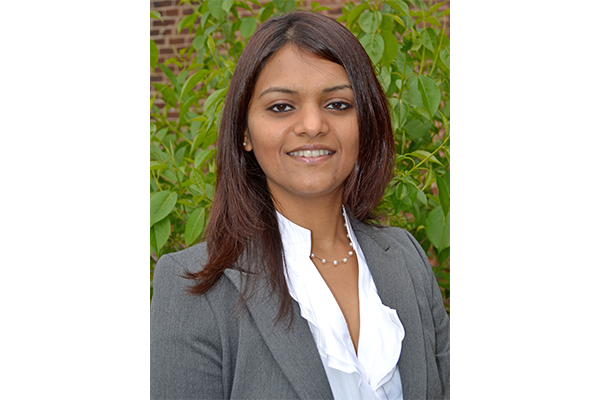
Ambika Bajpayee
Associate Professor
Bioengineering
Received a $630K National Science Foundation CAREER Award for “Developing Electrically Charged Biomaterials for Targeted Drug Delivery to Negatively Charged Complex Tissue Environments.”
Delivering drugs to human tissues such as joints, cartilage, and tendons is a persistent challenge because the tissues are dense and contain few blood vessels. Drugs intended to reach these structures tend to “stick” to whatever they reach first without penetrating deeper. With Bajpayee’s research, though, drugs could now be targeted to where they’re needed based on the negative charge of these tissues. Positively charged biomaterials carrying the drug would be drawn directly into the cellular matrix of these structures, channeling the drug deep into the tissue to reach cells close to the bone. Ultimately, this method could vastly improve treatments for osteoarthritis and other musculoskeletal diseases.
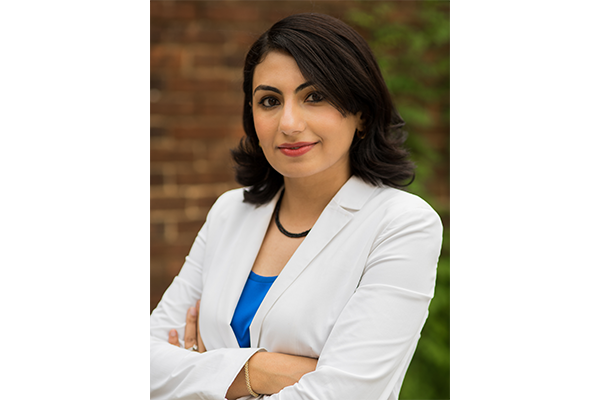
Sarah Ostadabbas
Assistant Professor
Electrical and Computer Engineering
Received a $600K National Science Foundation CAREER Award for “Learning Visual Representations of Motor Function in Infants as Prodromal Signs for Autism.”
In her career so far, Ostadabbas has conducted extensive studies of how infants’ body postures, facial expressions, and pacifier use behavior correlate with Autism Spectrum Disorder (ASD). Using pattern recognition and advanced artificial intelligence (AI), she’s created algorithms that can search for and identify the indicators linked to autism. With this grant, she’ll take it a step further: developing a targeted, AI-guided infant motor function monitoring and assessment system purpose-built to uncover the relationship between certain infant behaviors and future ASD. She’ll use baby monitor videos from study participants to unobtrusively examine infants’ motor behavior in their natural environment—then establish a series of computer vision-based algorithms to identify body and facial poses that can predict the presence of neurodivergent behaviors. While currently children with ASD aren’t diagnosed until an average age of four, this study could lead to much earlier diagnoses—and earlier interventions.
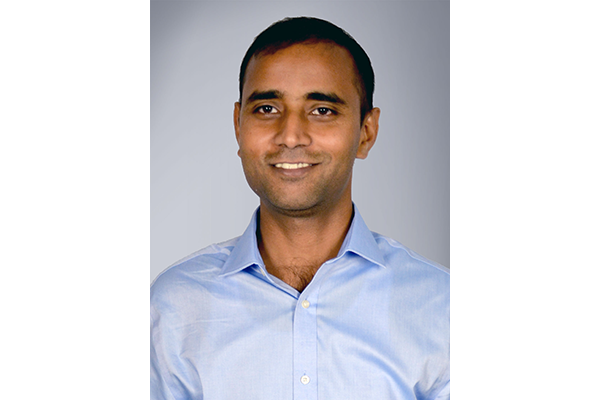
Aatmesh Shrivastava
Assistant Professor
Electrical and Computer Engineering
Received a $500K National Science Foundation CAREER Award for “An Ultra-low Power Analog Computing Hardware Design Framework for Machine Learning Inference in Edge Biomedical Devices.”
A sometimes-overlooked technology—analog computing—could hold the key to ultra-tiny wearable and implantable medical devices for monitoring seizures, sleep apnea, heart arrhythmia, and more. Compared to digital chips, analog chips are more energy-efficient and measure in just millimeters—five to ten times smaller than their digital counterparts. These minuscule chips fit into tiny health monitoring devices that a patient can wear at home instead of being tethered to a monitor in a hospital—a potential leap toward lower healthcare costs and more effective home-based care. Combined with machine learning technologies, this could yield a new generation of ultra-tiny “smart” devices that constantly improve their diagnostic capabilities.
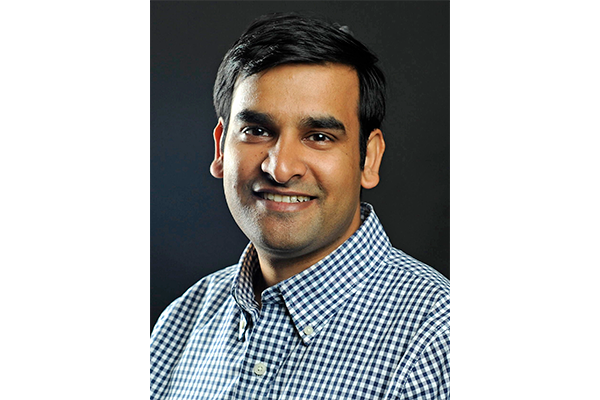
Devesh Tiwari
Associate Professor
Electrical and Computer Engineering
Received a $560K National Science Foundation CAREER Award for “Qurious: Methods for Making Erroneous Near-term Quantum Computers More Usable.”
By design, quantum computers hold the power to solve complex problems in a fraction of the time that it would take a standard (or classical) computer. The catch is that their performance is very temperamental. The devices must be kept at extremely cold temperatures, and their outputs are riddled with errors. While the long-term goal is to reduce the errors, Tiwari’s research is providing a way to work around them. He’ll use this NSF CAREER grant to design and develop a robust system-software ecosystem to help high-performance computing (HPC) programmers better interpret the “noisy” outputs of quantum machines. More usable outputs from these computers could yield advances in finance, artificial intelligence, pharmaceutical development, and more.