
2020-2021 NSF CAREER Award Winners
Announcing Seven NSF CAREER Award Recipients (2020-2021)
Seven faculty in the College of Engineering at Northeastern University received CAREER Awards from the National Science Foundation. The CAREER Award program offers the NSF’s most prestigious awards in support of early-career faculty who have the potential to serve as academic role models in research and education and to lead advances in the mission of their department or organization.
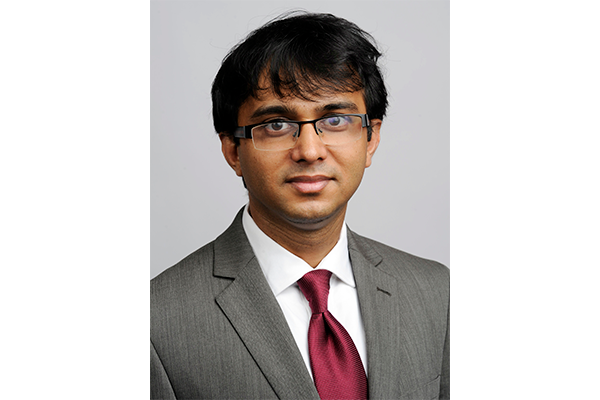
Muhammad Noor E Alam
Assistant Professor
Mechanical and Industrial Engineering
Received a $500K National Science Foundation CAREER Award for developing “Robust Matching Algorithms for Causal Inference in Large Observational Studies.”
The research will utilize the power of Big Data to infer causality in large-scale observational studies. It will develop tractable computational approaches to facilitate better policy decision-making. As an important use case, the project will evaluate policies for improving treatment quality of Opioid Use Disorder (OUD) using large-scale U.S. healthcare data.

Mahshid Amirabadi
Associate Professor
Electrical and Computer Engineering
Received a $400K National Science Foundation CAREER Award for “Universal SiC-Based Power Converters for Renewable Energy Systems.”
The research will create high power density and ultra-reliable converters by combining wide-bandgap devices with new universal converter topologies that have the ability to eliminate less reliable components commonly used in power converters, such as electrolytic capacitors, as well as bulky components like low-frequency transformers. These improvements will contribute to a long-term goal of realizing ultra-high-performance renewable energy systems.

Cristian Cassella
Assistant Professor
Electrical and Computer Engineering
Received a $409K National Science Foundation CAREER Award for “Giant Tunability through Piezoelectric Resonant Acoustic Metamaterials for Radio Frequency Adaptive Integrated Electronics.”
For advanced technologies to succeed, such as cloud-storage, edge-computing, machine learning, artificial intelligence (AI), and fifth-generation (5G) wireless communication, new hardware components such as more stable frequency synthesizers (FSs) based on novel materials and techniques need to be developed. Also, the Internet-of-Things has created a growing number of wireless nodes within an already congested spectrum. To address this, the research project will develop a new class of passive, tunable, and high-performance integrated resonant devices, namely the Piezoelectric Resonant Acoustic Metamaterials (pRAMs). pRAMs will enable new stable frequency synthesizers, adaptive front ends for IoT radios, and many other on-chip transducers for sensing and communication.

Joshua Gallaway
DiPietro Assistant Professor
Chemical Engineering
Received a $400K National Science Foundation CAREER Award for “Engineering Electrochemical Reversibility in Disordered Materials for High Energy Density Batteries.”
Rechargeable batteries that are non-flammable and inexpensive are needed for the widespread adoption of renewable energy. The project will conduct research on advanced battery materials that have the potential for greater energy density and cycle life while operating in non-flammable water-based electrolytes.
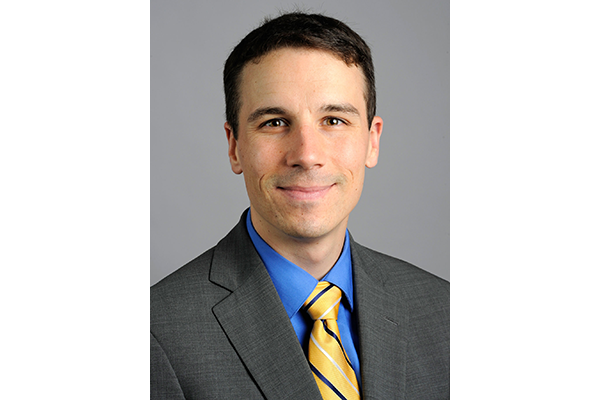
Michael Kane
Assistant Professor
Civil and Environmental Engineering
Received a $763K National Science Foundation CAREER Award for “Human-Centric Automation in the Built Environment.”
Buildings, electric grids, and other aspects of the built environment are becoming increasingly automated to satisfy both complex societal objectives and individuals’ needs. The research will enable the design of automation in the built environment that models human physiological and behavioral responses to changing environmental temperature conditions to satisfy competing objectives of energy management and occupant comfort.

Abigail Koppes
Associate Professor
Chemical Engineering
Received a $500K National Science Foundation CAREER Award for “Defining the Regulators of Enteric Plasticity in Engineered Microfluidic Environments.”
The research will engineer and apply microphysiological systems to better understand how the nervous system regulates the gut in response to inflammation. She will develop plastic, disposable, handheld devices that expose engineered tissue to a range of signals, then measure the response. These models have wide applications to other organs in the body and will advance knowledge in neurobiology and engineering for human health discovery.

Harikrishnan Parameswaran
Assistant Professor
Bioengineering
Received a $602K National Science Foundation CAREER Award for “Elucidating the Role of Collective Cell-Matrix Interactions in the Mechanobiology of Airway Narrowing.”
The research investigates the mechanisms that underlie a newly discovered phenomenon in the smooth muscle where cells can work together to sense contractile stimuli as a collective. In collective sensing, smooth muscle cells communicate with each other, using their force to modulate the frequency of intercellular calcium waves. By communicating with each other, the ensemble can completely change how each cell perceives contractile stimulus and the overall force it generates. The research seeks to understand the underlying mechanobiological interactions at the cellular level and their role in regulating airway caliber. This work can inform new therapies that target the airway’s extracellular components to provide relief for the millions who suffer from respiratory diseases like asthma.